
Have you ever wondered why some teams just seem to click while others fall apart despite having incredibly talented individuals? The answer might lie in something far more nuanced than skill sets or experience levels. Dr. Meredith Belbin, a British researcher and management theorist, spent years studying team dynamics and came to a fascinating conclusion — it’s not about having the smartest people in the room, it’s about having the right mix of people. His groundbreaking work gave birth to what we now know as the Belbin Team Roles framework, a system that has quietly revolutionized the way organizations around the world build, manage, and develop their teams.
What Are the 9 Belbin Team Roles Explained
Dr. Meredith Belbin didn’t stumble upon his theory overnight. His research began in the late 1960s and early 1970s at Henley Business School (then known as the Administrative Staff College) in Oxfordshire, England. Working alongside a team of researchers including Professor Roger Meredith Belbin and psychometrician Gillian Stamp, Belbin conducted extensive experiments using business simulation games with management students. Over the course of nearly a decade, teams were observed, tested, and analyzed to determine what made some groups consistently outperform others. What emerged was a clear pattern — successful teams weren’t built on individual brilliance, but on a balanced combination of behavioral roles that each member naturally gravitated toward.
The Henley experiments were meticulous and methodical. Participants were assessed using psychometric tests, including personality inventories and critical thinking assessments, and then placed into teams. Belbin’s team tracked outcomes over multiple rounds of business simulations, noting which team compositions thrived and which ones crumbled. One of the most striking findings was what Belbin called the “Apollo Syndrome” — teams made up entirely of high-intellect individuals often performed worse than teams with more diverse behavioral profiles. These brilliant teams would get bogged down in debate, struggle to make decisions, and fail to execute. It was a revelation that turned conventional hiring wisdom on its head and gave Belbin the evidence he needed to formalize his framework.
The result of all that rigorous work was the identification of nine distinct team roles, each representing a cluster of behaviors, strengths, and allowable weaknesses that a person naturally brings to a group setting. These roles are divided into three broad categories: Action-Oriented Roles, People-Oriented Roles, and Thought-Oriented Roles. Here’s a breakdown of each:
- 🔹 Shaper (Action-Oriented) — Driven, dynamic, and thrives under pressure. Shapers challenge the team to keep moving and overcome obstacles, though they can sometimes be seen as aggressive or provocative.
- 🔹 Implementer (Action-Oriented) — Reliable, efficient, and practical. Implementers turn ideas into action plans but may be resistant to change or new approaches.
- 🔹 Completer-Finisher (Action-Oriented) — Meticulous, conscientious, and detail-oriented. They ensure nothing slips through the cracks, though they can be accused of over-worrying or being reluctant to delegate.
- 🔹 Coordinator (People-Oriented) — Mature, confident, and a natural chairperson. Coordinators focus on team objectives and delegate effectively, though they may be seen as manipulative at times.
- 🔹 Teamworker (People-Oriented) — Cooperative, perceptive, and diplomatic. Teamworkers help maintain harmony within the group but can be indecisive in crunch moments.
- 🔹 Resource Investigator (People-Oriented) — Enthusiastic, outgoing, and excellent at networking. They explore opportunities and develop contacts but may lose interest quickly once the initial excitement fades.
- 🔹 Plant (Thought-Oriented) — Creative, imaginative, and free-thinking. Plants generate new ideas and solve difficult problems but can be poor communicators and may ignore practical details.
- 🔹 Monitor Evaluator (Thought-Oriented) — Strategic, sober, and discerning. Monitor Evaluators weigh up options with great accuracy but can lack the drive to inspire others.
- 🔹 Specialist (Thought-Oriented) — Single-minded, self-starting, and dedicated. Specialists bring deep expertise to the team but can be narrow in focus and contribute only in a limited area.
What makes this framework so powerful is that it doesn’t label people as “good” or “bad” team members. Every role has genuine value, and every role comes with what Belbin diplomatically calls “allowable weaknesses” — the flip side of each strength. A person is rarely locked into just one role either; most people have two or three preferred roles they naturally shift between depending on the team’s needs and composition. This flexibility is what makes Belbin’s model both realistic and deeply human in its approach.
How Top Companies Use Belbin to Boost Teams
The Belbin Team Roles framework isn’t just an academic curiosity gathering dust in business school libraries — it has been adopted by some of the world’s most prominent organizations, both in the private sector and government. Multinational corporations like Procter & Gamble, Boeing, and Nestlé have incorporated Belbin assessments into their talent development and team-building strategies. These companies use the framework during project formation, helping HR leaders and department heads identify gaps in a team’s role profile before problems arise. Rather than waiting for dysfunction to surface, they proactively build teams that have the right behavioral balance from day one, resulting in fewer conflicts, faster decision-making, and more consistent project delivery.
Government agencies have also embraced Belbin’s methodology with impressive results. In the United Kingdom, various departments within the Civil Service have used Belbin profiling as part of leadership development programs. The framework helps public sector managers understand why some inter-departmental teams struggle to collaborate effectively — often because they’re overloaded with Monitor Evaluators and lacking Shapers or Resource Investigators to drive momentum. Similarly, the European Commission and various NATO affiliated bodies have used Belbin assessments during senior leadership training to help cross-cultural, multi-national teams understand each other’s behavioral tendencies. In environments where miscommunication can have serious real-world consequences, having a shared language for team behavior is invaluable.
A particularly compelling published study worth noting is “Belbin’s Team Role Theory: An Empirical Study” which appeared in the Journal of Managerial Psychology. The study examined how Belbin role distributions correlated with team performance across multiple industries and found statistically significant relationships between role balance and positive outcomes in project completion rates and team satisfaction scores. The research reinforced what Belbin’s Henley experiments had suggested decades earlier — that role diversity is not a “nice to have” but a genuine performance driver. The study also highlighted that teams which underwent Belbin profiling and received coaching based on their results showed measurable improvements in communication and conflict resolution within just a few months of implementation.
Beyond formal research, real-world case studies continue to validate the model’s effectiveness. Hewlett-Packard (HP) famously used Belbin profiling during a major organizational restructuring phase, helping managers understand why certain product development teams were consistently underperforming. The analysis revealed that several teams had a surplus of Plants and Specialists — brilliant thinkers — but were critically short on Implementers and Completer-Finishers. Ideas were abundant, but execution was weak. By reshuffling team compositions and coaching individuals to flex into secondary roles, HP saw a marked improvement in product launch timelines and cross-functional collaboration. It was a textbook example of how a relatively simple behavioral framework can have a profound operational impact.
What’s perhaps most remarkable about the Belbin framework is how it shifts the conversation from blame to understanding. When a team isn’t performing, the instinct is often to point fingers at individuals. Belbin gives teams a more constructive lens — instead of asking “who is the problem?”, teams start asking “what role are we missing?” or “are we overloaded in one behavioral area?” This cultural shift can be transformative, particularly in high-stakes environments like healthcare, military operations, or global finance. Hospitals in the United Kingdom’s National Health Service (NHS) have used Belbin profiling to improve surgical team dynamics, reduce handover errors, and strengthen communication between consultants and nursing staff — areas where the cost of poor teamwork is literally measured in human lives.
For organizations considering adopting the Belbin framework, the process is refreshingly straightforward. Individuals complete the Belbin Self-Perception Inventory (BSPI), and ideally, their colleagues also complete an Observer Assessment for a 360-degree view of how each person actually behaves within a team. The combined results generate a detailed report that maps an individual’s role profile. Team leaders can then use these profiles collectively to visualize the team’s overall behavioral landscape — identifying strengths, gaps, and potential friction points. Belbin Associates, the organization that manages and licenses the framework globally, offers certified practitioner training for HR professionals and coaches who want to embed this approach into their organizational culture more deeply. Team facilitation techniques and experiential learning approaches can further enhance the implementation of Belbin principles, making them more engaging and actionable for teams. With decades of research behind it and a growing body of real-world evidence supporting its effectiveness, Belbin’s framework remains one of the most practical and enduring tools in the modern workplace toolkit.
The beauty of the Belbin Team Roles framework is that it doesn’t try to change who people are — it simply helps teams understand each other better. From the lecture halls of Henley Business School to the boardrooms of multinational corporations and the corridors of government agencies, Belbin’s insights have proven time and again that great teamwork isn’t accidental. It’s the result of understanding, balance, and a willingness to value different kinds of contribution. Organizations looking to measure the impact of such frameworks can learn from approaches detailed in resources like program evaluation best practices and research from institutions such as the Center for Creative Leadership. Whether you’re a manager trying to fix a struggling team or an individual wondering why you always seem to clash with a particular colleague, exploring your Belbin profile might just give you the clarity you’ve been looking for. In a world that increasingly demands collaboration across cultures, disciplines, and time zones, having the right team — not just the right talent — has never mattered more.
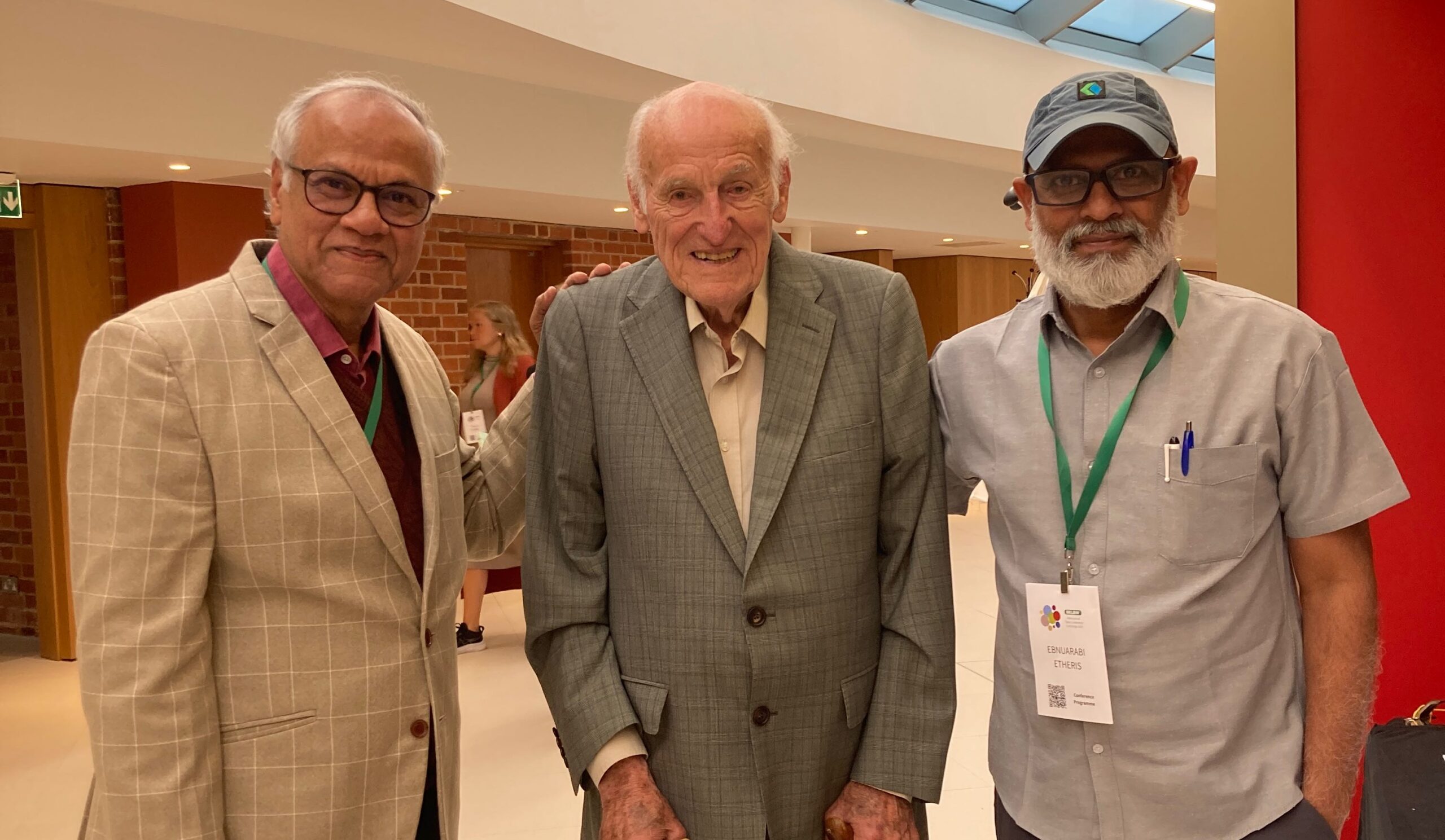
About the Author: Ebnu Etheris Ma.IDT, B.Hrd

Related Posts
- Categories: Belbin Team Roles, People analytics
Go behind the scenes of a Teamworkbound Belbin Team Roles session in Singapore — from icebreaker to team placement, step by step.
- Categories: Belbin Team Roles, People analytics
Discover how Belbin Team Roles training helps Singapore companies and government agencies build balanced, high-performing teams through structured facilitation.
Top 10 activities
This blog will showcase top 10 experiential activities that we have conducted in our training programs. Included are models associated with experiential learning, team dynamics, understanding personality and leadership. We will showcase crisp summary of good books we have read on this blog as well.
Ebnu Etheris
MA.IDT and B. Ed & Trn
Founder Teamworkbound
Magazine Feature
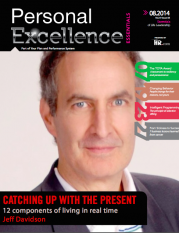
Personal Excellence Magazine (Aug 2014 issue) based in Canada featured our article.

Human Resources Magazine (July 2012 issue), featured Teamwork Bound views on what it takes to engage senior managers.
Our Evaluations
Blog articles
Get started with Teamwork Bound
Want to learn what Teamwork Bound can do for you? See for yourself with a free trial, tests and short in house speaking engagements. We will assure you that our program evaluations meet 85% percentile score, failing which we will not charge for our training sessions.