
Why Leadership Training Actually Sticks
Lessons from Our 4-Day Empowered Leadership Programme with ICA Most leadership training is forgotten within a week. Slides get closed, binders get shelved, and the “aha” moments fade back into the daily grind. So when the Immigration & Checkpoints Authority (ICA) engaged TeamworkBound to run a 4-day Empowered Leadership programme, we built it around a simple belief: leadership isn’t taught, it’s experienced. Twenty participants went through four days of hands-on activities, real self-assessment, and facilitated discussion rather than one-way lectures. The result: an overall programme rating of 4.9 out of 5 — and, more importantly, feedback that shows the learning is actually being applied back at work. Here’s what made it work, and why we think it’s a model other organisations — corporate and government alike — should be looking at. 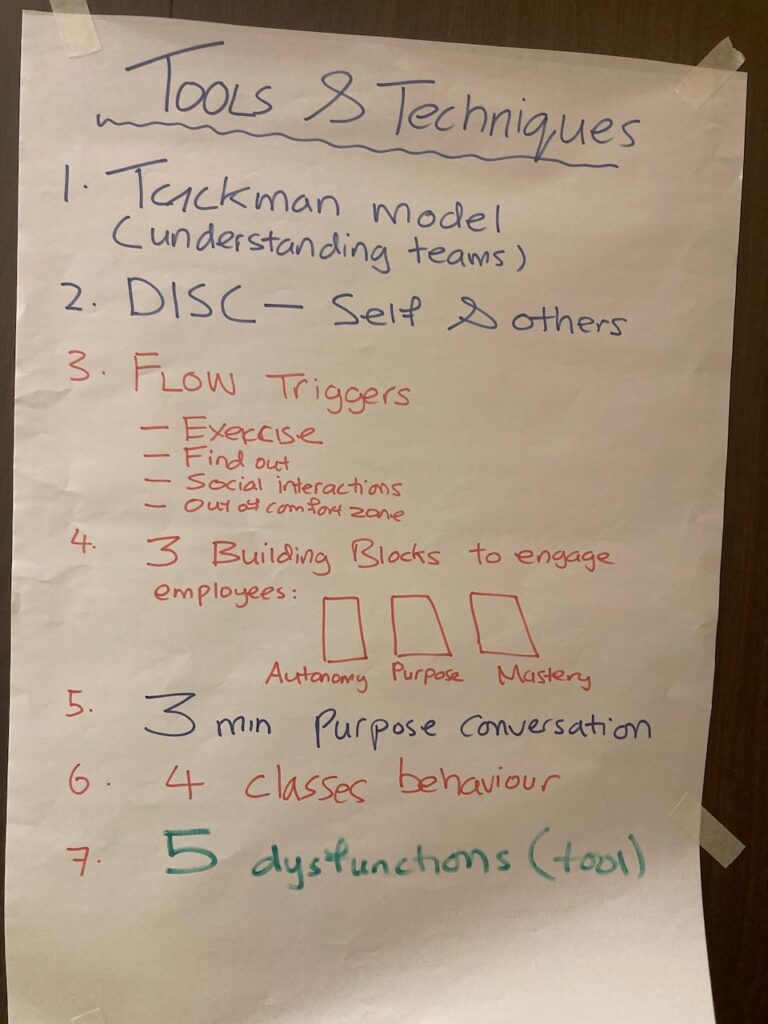
Experiential Activities Beat Slides, Every Time
Adults don’t retain leadership concepts by being told about them. They retain them by doing something, getting it wrong, reflecting, and trying again. Across the four days, ICA’s participants worked through team missions and tasks designed to surface real dynamics — not simulated ones. As one participant put it, the activities were about “missions and tasks together as a team which can be applied not only at work but in other aspects in life.” We also used visual, self-assessment based tools rather than pure theory:
- DISC profiling to help participants understand their own communication and work style, and how it collides or complements others’
- The Tuckman model (forming, storming, norming, performing) to give language to what teams actually go through as they mature
- The 5 Dysfunctions of a Team framework to diagnose where trust, accountability, and results typically break down
- 3-minute purpose conversations — a deceptively simple exercise that pushed participants to articulate why their work matters, quickly and honestly
One of the visual tools we used to unpack influence and communication broke persuasion down into three levers — credibility (Ethos), data (Logos), and emotional connection (Pathos) — and asked participants to map their own default style. It’s the kind of framework that’s easy to explain in five minutes and hard to forget, because participants immediately saw it in how they lead their own teams. 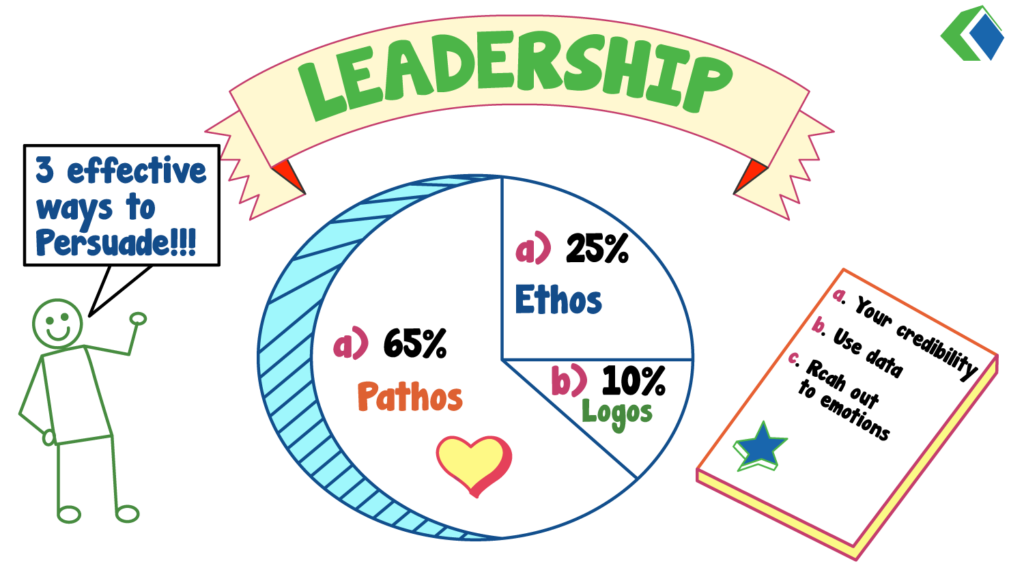 Persuasion framework graphic used during the ICA Empowered Leadership programme
The pattern in the feedback was consistent: participants didn’t just say the activities were “useful” — they used words like engaging, fulfilling, and even “lots of sweat, but fulfilling.” That’s the signature of experiential learning done right. It should feel like work, not a webinar.
The Facilitator Makes or Breaks the Room
You can have the best-designed activities in the world and still lose a room if the facilitator can’t read it. Facilitation is a skill, not a formality — knowing when to push a group harder, when to slow down and let a concept land, and when to step back and let participants teach each other. The evaluation scores reflect this directly. Every facilitator-related question scored 4.9 or 5.0 out of 5:
| Programme Effectiveness | Score / 5 |
| Course content met expectations |
4.9 |
| Topics relevant to the job |
5.0 |
| Variety of activities stimulated interest |
4.9 |
| Facilitator prepared and organised |
5.0 |
| Facilitator used practical, useful examples |
4.9 |
| Facilitator varied methods to maintain interest |
5.0 |
| Facilitator responded well to learners’ needs |
4.9 |
| Overall average |
4.9 |
Participants noticed the difference a trained facilitator makes, and said so unprompted:
“Mr Ebnu is a very engaging and insightful trainer who is very ready to answer any queries and relate.” — Ernathasa
“The facilitators did an excellent job throughout the course. Big kudos to them.” — Muhammad Faisal
“Trainers were engaging and inclusive.” — Muhammad Syahiran
“Truly enjoyed the course, engaging!” — Muhammad Hannan Bin Azni
This is the part organisations often underweight when planning training: the framework matters, but the person running the room matters just as much. A skilled facilitator adapts DISC, Tuckman, or any assessment tool to the specific group in front of them — not a generic script. As research from the Center for Creative Leadership consistently shows, the quality of facilitation directly impacts learning transfer and application.
Why This Matters for Organisations in Singapore
Whether it’s a government agency like ICA or a private-sector team, the leadership challenges are strikingly similar: how do you get people to understand their own style, work better across differences, and lead with purpose under real pressure? Off-the-shelf lecture-style training rarely moves the needle on any of that. At TeamworkBound, this is the model we bring to every engagement — whether the tool is DISC, Belbin Team Roles, the Big Five, or 5 Behaviours of a Cohesive Team. We design strategy planning sessions and leadership programmes around experiential activities, validated assessment tools, and facilitators trained to read the room and adapt in real time. It’s why our programmes consistently score in the 4.8–5.0 range on post-course evaluations, and why participants describe them as engaging rather than another box to tick. If you’re planning a leadership development or strategy planning session for your organisation — whether you’re a Singapore corporate team or a government agency — and want it to be the kind people actually remember, get in touch with TeamworkBound. Contact: office@teamworkbound.com | www.teamworkbound.com
About the Author: Ebnu Etheris Ma.IDT, B.Hrd

Related Posts
Top 10 activities
This blog will showcase top 10 experiential activities that we have conducted in our training programs. Included are models associated with experiential learning, team dynamics, understanding personality and leadership. We will showcase crisp summary of good books we have read on this blog as well.
Ebnu Etheris
MA.IDT and B. Ed & Trn
Founder Teamworkbound
Magazine Feature
Personal Excellence Magazine (Aug 2014 issue) based in Canada featured our article.

Human Resources Magazine (July 2012 issue), featured Teamwork Bound views on what it takes to engage senior managers.
Our Evaluations
Blog articles
Get started with Teamwork Bound
Want to learn what Teamwork Bound can do for you? See for yourself with a free trial, tests and short in house speaking engagements. We will assure you that our program evaluations meet 85% percentile score, failing which we will not charge for our training sessions.