

Every leader likes to believe their team is functioning well. The meetings happen, the deliverables get done, and on the surface, things look fine. But beneath that professional veneer, something quietly corrosive may already be taking hold — disengagement, mistrust, and a creeping sense that speaking up just isn’t worth it. The truth is, most teams don’t fall apart dramatically. They erode slowly, one unspoken frustration at a time, until the day your best people hand in their resignations and you’re left wondering what went wrong. Patrick Lencioni’s groundbreaking work, The Five Dysfunctions of a Team, offers a powerful lens for identifying exactly these kinds of hidden cracks before they become irreparable fractures. This article is your wake-up call.
Why Your Team’s Blind Spots Are Costing You Talent
The resignation of a valued team member rarely comes out of nowhere — at least not from the employee’s perspective. Research consistently shows that people don’t leave companies; they leave managers and toxic team cultures. A 2023 report by McKinsey on the Great Attrition found that the top reasons employees leave are not primarily about compensation — they’re about not feeling valued, not feeling a sense of belonging, and not trusting their leadership. These are precisely the symptoms of dysfunctional team dynamics, and they are alarmingly easy to miss when you’re in the thick of day-to-day operations. By the time you notice the pattern, you may already be three resignations deep.
Nowhere has this been more viscerally illustrated than in Singapore’s legal sector. In a striking development reported in the Singapore media, multiple lawyers at established firms resigned en masse, citing burnout, lack of psychological safety, and poor team culture as driving factors. These were not junior employees fresh out of law school — these were experienced, high-performing professionals who had quietly reached their breaking point. Their departures sent shockwaves through an industry that had long prided itself on prestige and stability. It was a stark reminder that no profession, no organisation, and no team is immune to the consequences of unaddressed dysfunction.
The painful irony is that most leaders genuinely do not see it coming. That’s the nature of a blind spot — it’s invisible to the person who has it. Teams can appear productive on the surface while harbouring deep-seated resentment, fear of conflict, and a culture of performative accountability. Without a structured framework to diagnose these hidden issues, leaders are essentially navigating in the dark. This is precisely where Lencioni’s model becomes not just useful, but essential. It gives teams a shared language and a clear diagnostic tool to surface what has been silently festering — and to do something about it before the talent walks out the door.
The Five Dysfunctions Hiding in Plain Sight Today
Patrick Lencioni’s The Five Dysfunctions of a Team, first published in 2002 and still as relevant as ever, presents a deceptively simple pyramid model that maps the root causes of team failure. At the base sits absence of trust — the foundational dysfunction from which all others flow. When team members are unwilling to be vulnerable with one another, to admit mistakes or ask for help, every interaction becomes guarded and political. Above that sits fear of conflict, where teams opt for artificial harmony over honest, productive debate. Then comes lack of commitment, where decisions are made without genuine buy-in. This leads to avoidance of accountability, where peers refuse to hold each other to agreed-upon standards. Finally, at the top of the pyramid, sits inattention to results, where individual ego and departmental agendas override collective success. Each dysfunction feeds the next, making the whole model a cascade of compounding problems.
What makes Lencioni’s framework so powerful — and so uncomfortably accurate — is that these dysfunctions don’t announce themselves. They hide behind professional politeness, corporate jargon, and the relentless busyness of modern work. A team that never debates in meetings isn’t necessarily aligned — they may simply be afraid. A team that consistently misses targets may not lack capability — they may lack genuine commitment because they were never truly heard in the planning process. Avoidance of accountability often masquerades as “respect for colleagues” or “trusting people to manage themselves.” These are the blind spots that leaders routinely miss, and that employees — especially high performers — see with painful clarity. High performers, in particular, grow frustrated when they’re held to a standard that others are allowed to ignore, and they vote with their feet.
The good news is that these dysfunctions are diagnosable and, with the right intervention, genuinely fixable. The Five Dysfunctions model comes with a validated team assessment tool — the Team Diagnostic Survey — that allows organisations to measure where their team sits on each of the five dimensions. It’s not about blame; it’s about clarity. When a team can look at their collective results and have an honest conversation about what they reveal, something remarkable happens: the trust that was absent begins to form. This is the starting point of real transformation. And this is exactly the kind of structured, evidence-based work that we specialise in helping organisations across Singapore and Asia undertake.
At our practice, we offer both the Five Dysfunctions diagnostic assessment and a comprehensive training and facilitation programme built around Lencioni’s model, tailored specifically for teams operating in the Southeast Asian and broader Asian business context. Culture matters enormously in how these dysfunctions manifest — in many Asian workplaces, for example, the fear of conflict and the avoidance of public disagreement are deeply embedded in social norms around hierarchy and face-saving. This doesn’t mean conflict avoidance is inevitable; it means the intervention must be culturally intelligent. Our facilitators are experienced in navigating these nuances, helping teams in Singapore, Malaysia, Indonesia, the Philippines, and beyond build the kind of trust and accountability that transcends cultural defaults without dismissing them.
The stakes have never been higher. Attrition is expensive — studies estimate that replacing a single employee can cost anywhere from 50% to 200% of their annual salary, when you factor in recruitment, onboarding, lost productivity, and the institutional knowledge that walks out the door with them. In competitive markets like Singapore, where talent is scarce and employee expectations are rising sharply, organisations simply cannot afford to lose good people to preventable dysfunction. According to research from the Center for Creative Leadership, effective team leadership and employee retention are directly linked to how well leaders address cultural and interpersonal dynamics. The lawyers who resigned, the engineers who quietly updated their LinkedIn profiles, the managers who stopped raising ideas in meetings — they all had something in common: they saw the dysfunction, waited to see if it would change, and when it didn’t, they left. Don’t let your team become another cautionary tale.
The most dangerous thing about a team’s blind spots is the false confidence they create. When things appear to be running smoothly, it’s tempting to assume they are. But Lencioni’s work teaches us that functional-looking teams can be deeply dysfunctional on the inside, and that the gap between appearance and reality is where talent goes to die quietly. The five dysfunctions are not exotic edge cases — they are the default state of most teams that haven’t done the deliberate work of building trust, embracing conflict, securing commitment, demanding accountability, and focusing on collective results. As noted in Harvard Business Review, understanding the nuances of organizational growth and culture is essential for sustainable leadership. The framework is not complicated. The assessment is not painful. But the decision to actually look — to invite honest scrutiny of how your team truly operates — requires courage. If you’re a leader in Singapore or across Asia who is serious about retaining your best people and building a team that genuinely performs, we’re here to help you take that first step. The blind spots won’t fix themselves. But with the right tools and the right support, you absolutely can.
Programs designed by Expert Educators
Certified in the use of psychometric tools such as Everything DISC Singapore, Belbin, Big 5, Wiley 5 behaviours and leadership insights. You can tap on our robust experience of having worked with senior managers, and directors from MNC’s and government agencies. Send us an e-mail, here
About the Author: Ebnu Etheris Ma.IDT, B.Hrd

Related Posts
- Categories: DISC profiling tool, Five Behaviours Wiley
Across 5 sessions and 54 participants, our Team Excellence Blueprint using Everything DiSC and the 5 Behaviours of a Cohesive Team consistently scored above 4.4 out of 5. Here is what the data — and the people — revealed about building high-performing teams in Singapore.
- Categories: Five Behaviours Wiley, Strategy
Build stronger teams with proven behavior tools. Work with us, an Authorised partner for Wliey based in Singapore, specialised in OD interventions for organisations.
Top 10 activities
This blog will showcase top 10 experiential activities that we have conducted in our training programs. Included are models associated with experiential learning, team dynamics, understanding personality and leadership. We will showcase crisp summary of good books we have read on this blog as well.
Ebnu Etheris
MA.IDT and B. Ed & Trn
Founder Teamworkbound
Magazine Feature
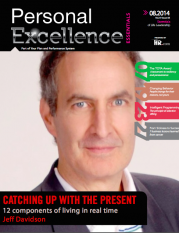
Personal Excellence Magazine (Aug 2014 issue) based in Canada featured our article.

Human Resources Magazine (July 2012 issue), featured Teamwork Bound views on what it takes to engage senior managers.
Our Evaluations
Blog articles
Get started with Teamwork Bound
Want to learn what Teamwork Bound can do for you? See for yourself with a free trial, tests and short in house speaking engagements. We will assure you that our program evaluations meet 85% percentile score, failing which we will not charge for our training sessions.