
If you’ve ever sat in a meeting where everyone nodded along but nothing actually changed, you already understand the problem that the Wiley 5 Behaviours programme was designed to solve. Real teamwork — the kind that drives results, builds trust, and makes people actually want to come to work — is rarer than most organisations care to admit. In Singapore, where high-performing business culture meets diverse, multicultural workforces, the challenge of building cohesive teams is both urgent and uniquely complex. That’s exactly why working with a Wiley 5 Behaviours Authorised Partner in Singapore isn’t just a nice-to-have. It’s a strategic decision that can fundamentally reshape how your people work together.
What Is the Wiley 5 Behaviours Programme?
The Wiley 5 Behaviours programme is a team development solution built on the foundational work of Patrick Lencioni, whose bestselling book The Five Dysfunctions of a Team became one of the most widely read leadership texts in the world. The programme takes Lencioni’s model and turns it into a structured, assessment-driven experience that helps real teams identify where they’re struggling and what they need to do differently. It’s not theoretical fluff — it’s grounded in observable, measurable behaviours that either hold teams back or propel them forward.
The five behaviours at the heart of the programme are Trust, Conflict, Commitment, Accountability, and Results — each one building on the last like layers of a pyramid. Without trust, teams can’t engage in productive conflict. Without healthy conflict, they can’t achieve genuine commitment. Without commitment, accountability falls apart. And without accountability, results suffer. The model is elegantly simple, but applying it in the real world requires honest reflection, skilled facilitation, and a willingness to have uncomfortable conversations.
What makes the Wiley version of this framework particularly powerful is the psychometric assessment layer. Participants complete a personality assessment based on the Everything DiSC model, which helps them understand not just what the five behaviours look like in theory, but how their own personality tendencies affect their ability to demonstrate those behaviours in practice. This personalisation is what separates the programme from generic teamwork training that treats everyone the same.

There are two versions of the programme available — Five Behaviours Personal Development, designed for individuals who want to become better team players regardless of their specific team, and Five Behaviours Team Development, which is built around an intact team working through the model together. Both versions offer rich insights, but the Team Development experience is particularly transformative when facilitated well, because it creates shared language and shared accountability within a group that actually works together day to day.
Why Singapore Teams Struggle With True Teamwork
Singapore is a remarkable place to do business. It’s efficient, internationally connected, highly educated, and home to some of the most ambitious professionals in Asia. But these very strengths can sometimes work against deep team cohesion. High-achieving individuals in Singapore’s competitive professional culture often find it genuinely difficult to be vulnerable, to admit they don’t have all the answers, or to engage in the kind of open, sometimes messy debate that leads to the best decisions. The cultural premium placed on face-saving and harmony can quietly suppress exactly the behaviours that great teams need.

Multicultural teams are another layer of complexity. Singapore’s workforce draws from Chinese, Malay, Indian, Eurasian, and expatriate communities, each with different communication styles, different assumptions about hierarchy, and different comfort levels with direct disagreement. What looks like passive agreement in one cultural context might actually be polite resistance. What seems like aggressive pushback in another might just be enthusiastic engagement. Without a shared framework and facilitated conversations, these differences can silently erode team trust over time.
There’s also the pace of work to consider. Singapore’s business environment is fast-moving, and teams are often under pressure to deliver results quickly. This urgency creates a tendency to skip the relationship-building and trust-development work that actually makes teams faster in the long run. Leaders often assume that because their team is performing adequately, everything is fine — when in reality, they’re leaving significant potential on the table by never addressing the underlying dynamics that are holding people back.
Remote and hybrid work has added yet another layer of difficulty. Post-pandemic, many Singapore teams are navigating a world where some people are in the office, some are working from home, and coordination happens across multiple time zones. Building trust and psychological safety is hard enough in person — doing it across screens, messaging apps, and asynchronous workflows requires deliberate effort and the right tools. The Wiley 5 Behaviours programme, delivered by a skilled Authorised Partner who understands the local context, gives teams that deliberate structure they so badly need.
How an Authorised Partner Delivers Real Results
Not everyone who claims to offer team development training is equipped to deliver the Wiley 5 Behaviours programme with the rigour and depth it deserves. An Authorised Partner has been specifically certified by Wiley to administer the assessments, facilitate the workshops, and interpret the results in ways that create genuine insight rather than surface-level conversation. This matters enormously, because the programme’s value lies not in the content itself but in how it’s brought to life for a specific team in a specific context.

Singapore Five Behaviours Authorised Partner
An experienced Authorised Partner in Singapore brings something beyond just certification — they bring local knowledge. They understand the cultural nuances that affect how Singaporean professionals respond to vulnerability-based trust exercises. They know how to navigate conversations about conflict in teams where direct disagreement feels risky. They can read the room when a team member from a particular cultural background is disengaging, and they know how to bring that person back into the conversation in a way that feels respectful rather than confrontational. This localised facilitation skill is something you simply cannot get from an off-the-shelf online course.
The process typically begins with an assessment phase, where all team members complete the relevant Wiley profiles. The Authorised Partner then analyses the results at both an individual and team level, identifying patterns, blind spots, and areas of alignment. This data-driven foundation means that the workshop conversations aren’t generic — they’re anchored in what this specific team actually needs to work on, which makes participants far more likely to engage seriously and take the insights back to their everyday work.
Follow-up and sustainability are where many team development programmes fall short, and a good Authorised Partner knows this. The Wiley 5 Behaviours journey doesn’t end when the workshop wraps up. A skilled partner will help teams build accountability structures, revisit the framework at regular intervals, and integrate the language of the five behaviours into their ongoing team rhythms. Over time, phrases like “are we building trust here?” or “is this healthy conflict or unhealthy avoidance?” become part of how the team naturally talks about itself — and that’s when lasting culture change really begins.
Getting Started With Wiley 5 Behaviours in Singapore
If you’re considering bringing the Wiley 5 Behaviours programme to your organisation in Singapore, the first step is finding the right Authorised Partner to work with. Look for someone who has a genuine track record of delivering the programme with intact teams in Singapore or across Southeast Asia, who can speak to both the cultural dynamics of the local market and the technical depth of the Wiley assessments. Ask for case studies, speak to past clients if possible, and pay attention to whether the partner seems genuinely curious about your team’s specific situation or whether they’re just selling you a packaged solution.
Before the programme begins, it’s worth investing time in leader alignment. The most successful Five Behaviours engagements happen when the team leader is genuinely committed to the process — not just signing off on it administratively, but willing to participate as a learner alongside their team. When a leader demonstrates vulnerability and openness during the programme, it gives everyone else permission to do the same. Research from Harvard Business Review consistently shows that leader behaviour is the strongest predictor of team psychological safety. If the leader is seen as going through the motions, the team will follow suit, and the programme will feel like just another HR initiative rather than a genuine turning point.
Consider the timing and format carefully. A one-day workshop can be a powerful catalyst, but it rarely creates lasting change on its own. Many Authorised Partners in Singapore offer modular programmes spread across several weeks or months, which gives teams time to apply what they’re learning between sessions and come back with real examples of where the five behaviours showed up — or didn’t — in their actual work. This spaced learning approach tends to produce far deeper behavioural change than a single intensive event, no matter how well-facilitated. This approach aligns well with broader strategy development and can be integrated with other frameworks like Belbin strategy planning for comprehensive team development.
Finally, think about how you’ll measure success. The Wiley 5 Behaviours programme offers re-assessment tools that allow teams to track their progress over time, which is invaluable for demonstrating ROI and maintaining momentum. Work with your Authorised Partner to define what success looks like for your team specifically — whether that’s reduced conflict escalation, faster decision-making, higher psychological safety scores, or something else entirely. When teams can see their own growth reflected in data, it reinforces the behaviours that got them there and creates a positive cycle of continuous improvement that goes far beyond any single training programme. Understanding how high-performing teams break silos and execute together can further enhance the impact of the Five Behaviours framework.
Building a truly cohesive team is one of the hardest and most rewarding things a leader can do. It requires honesty, patience, and the courage to look at uncomfortable truths about how people are really working together. The Wiley 5 Behaviours programme gives teams in Singapore a proven, research-backed framework for doing exactly that — and working with an Authorised Partner who understands the local context means you’re not just going through the motions, you’re creating real and lasting change. Whether your team is struggling with trust, stuck in unhealthy conflict avoidance, or simply not reaching its full potential, this programme offers a structured path forward. The question isn’t really whether your team could benefit from it. The question is whether you’re ready to take that first honest step.
About the Author: Ebnu Etheris Ma.IDT, B.Hrd

Related Posts
- Categories: Five Behaviours Wiley, OD tool kit
Most teams don't fail loudly — they quietly unravel. Ever wondered why we have a systemic issue of young lawyers who do not stay and thrive as legal eagles in Singapore? What has led to this constant loss of young lawyers in outr legal fraternity?
- Categories: DISC profiling tool, Five Behaviours Wiley
Across 5 sessions and 54 participants, our Team Excellence Blueprint using Everything DiSC and the 5 Behaviours of a Cohesive Team consistently scored above 4.4 out of 5. Here is what the data — and the people — revealed about building high-performing teams in Singapore.
Top 10 activities
This blog will showcase top 10 experiential activities that we have conducted in our training programs. Included are models associated with experiential learning, team dynamics, understanding personality and leadership. We will showcase crisp summary of good books we have read on this blog as well.
Ebnu Etheris
MA.IDT and B. Ed & Trn
Founder Teamworkbound
Magazine Feature
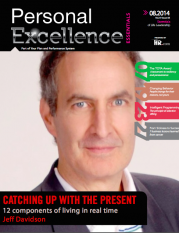
Personal Excellence Magazine (Aug 2014 issue) based in Canada featured our article.

Human Resources Magazine (July 2012 issue), featured Teamwork Bound views on what it takes to engage senior managers.
Our Evaluations
Blog articles
Get started with Teamwork Bound
Want to learn what Teamwork Bound can do for you? See for yourself with a free trial, tests and short in house speaking engagements. We will assure you that our program evaluations meet 85% percentile score, failing which we will not charge for our training sessions.